Crowdfunding in Japan is booming — but not in the way many overseas users or serial backers might expect.
While market leaders Kickstarter and Indiegogo began as scrappy playgrounds for indie inventors and garage-tinkering dreamers, Japan’s major platforms have long favored polished products, big brand names and risk-free innovation.
Product videos and images often arrive professionally shot, with prototypes already built and approved for mass production. There’s less creativity, less mess and less surprise.
As someone who has backed many campaigns and lives in Japan, I was curious. Could the local crowdfunding scene offer something closer to the original promise? A way to discover something new, support a big idea and feel like part of its journey?
Increasingly, what’s labeled as “crowdfunding” here looks more like slick, low-risk marketing. A way for established brands to repackage existing products and raise capital from consumers before committing to full production.
To be fair, that trend isn’t exclusive to Japan. Major Western platforms now also host campaigns from large brands testing new variations or building hype for commercial rollouts. In Japan, though, that approach feels built-in — not like a pivot, but a design choice.
It’s really just commerce dressed up as innovation.
Makuake, Campfire and Fundinno: What backers can expect
Japan’s three largest crowdfunding platforms — Makuake, Campfire and Fundinno — are easy to find, but not always easy to interpret.
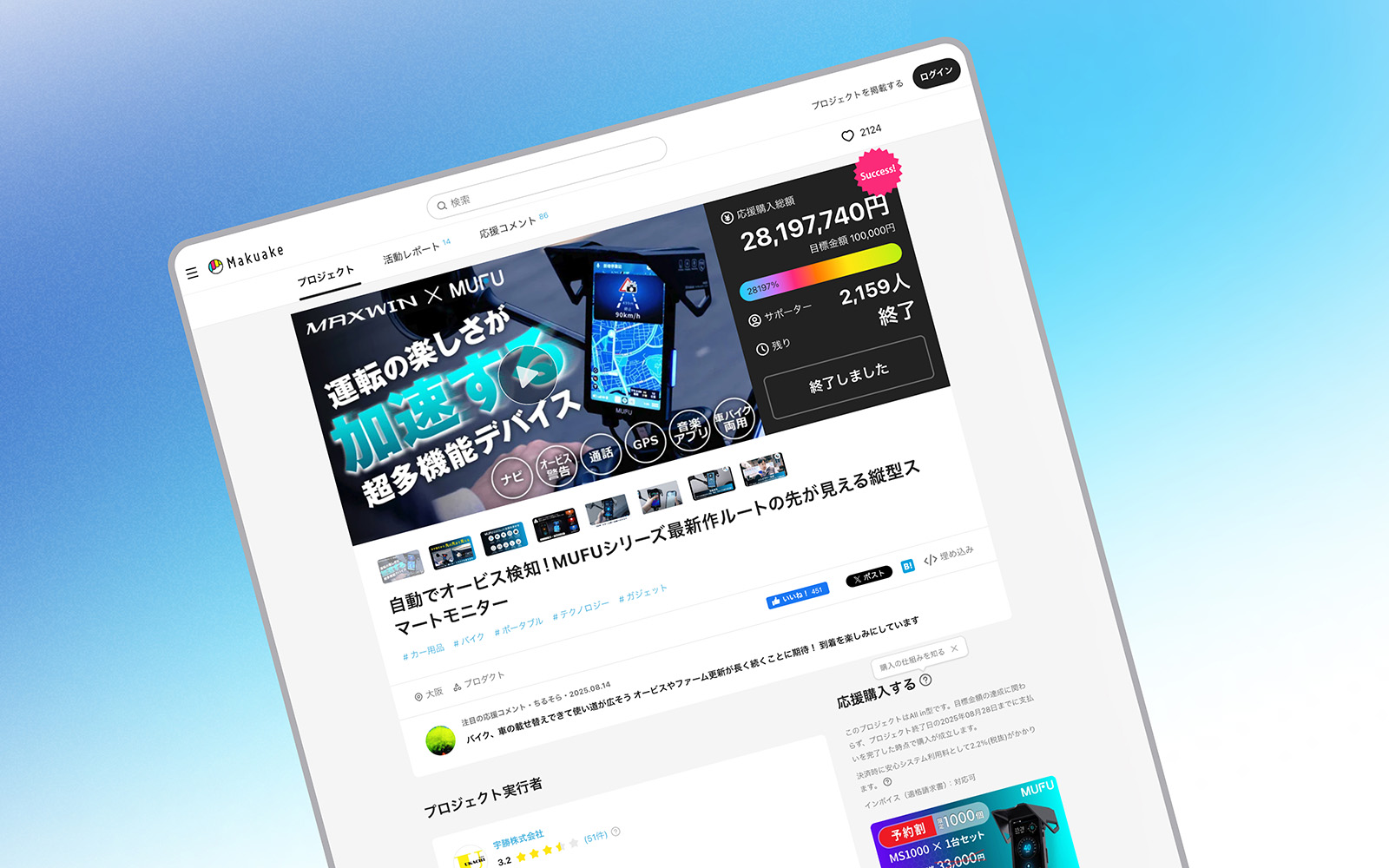
Makuake is the most high-profile and retail-focused. Campaigns often feel like early access sales rather than creative pitches. You’ll find travel mugs, projectors, pillows, pocket knives — all delivered with cinematic launch videos, aggressive social media marketing and early bird discounts. Many of the brands already exist. Some are even global manufacturers testing whether a slightly tweaked model will fly in Japan.
Campfire offers more range and, for curious backers, a bit more unpredictability. This platform allows small-scale creators, artists and community organizers to launch simpler campaigns — with less polish and fewer requirements. That opens the door to creative zines, documentary projects, local concerts and one-off food events.
These campaigns often feel more personal, but they can also come with less experience and more delivery uncertainty. The site leans closer to Kickstarter’s original spirit, though it still features its share of commercial products.
Fundinno operates in a different space entirely: equity crowdfunding. Rather than backing a product, you’re investing in a startup. It’s a niche world of pitch decks, shareholder returns and financial risk — far removed from consumer crowdfunding. For most backers, it’s not the place to discover your next favorite product.
Not just gadgets: A market on the move

According to a Grand View Horizon Databooks report, Japan’s online funding market is expected to keep growing through 2030.
As of 2024, crowdfunding generated an estimated ¥13.7 billion (about U.S.$94.1 million) in revenue and is projected to reach over ¥36 billion (U.S.$252 million) by the end of the decade.
In the same report, Makuake alone hosted more than 7,000 projects in fiscal 2023, raising nearly ¥13 billion (about U.S.$90 million) from supporters.
That level of activity shows just how far this model has moved from its early days. It’s not about ideas anymore — it’s about sales, scale and optimization.
For cynical consumers (like me), that shift can feel disheartening. Where Kickstarter once felt like a digital farmers market for ideas (a Wild West, of sorts), many Japanese platforms resemble well-oiled e-commerce engines complete with countdown clocks and influencer endorsements. It works, it just doesn’t inspire.
It’s a far cry from the era of Kickstarter design flops, missed delivery dates and DIY production line setbacks.
Today’s crowdfunding in Japan is less about invention and more about validating products before retail — all under the safe umbrella of a trusted brand.
The culture difference: Trust over innovation

It’s tempting to chalk up these differences to business strategy, but culture plays a big role here. In Japan, trust, reputation and harmony shape consumer behavior.
People are far more likely to support campaigns that feel “safe”: a known brand, a polished website, a clear delivery plan. Even risk — one of the foundational elements of crowdfunding — is reframed. The platforms screen campaigns carefully, and consumers expect products to arrive exactly as promised.
That creates an environment where truly new or unusual ideas rarely, if ever, break through. Instead of prototypes or projects actively looking to solve problems, you’re more likely to find product variations, deluxe versions and seasonal limited editions.
As Makuake CEO Ryotaro Nakayama said in an interview with Tim Romero on the Disrupting Japan podcast (“Crowdfunding in Japan is Not About Startups“): “Crowdfunding has taken off more slowly in Japan than it has in the U.S., and it has followed a different growth path. It started out primarily as a way to raise money for charitable causes and at the moment crowdfunding seems to be having a more significant impact on corporate Japan than on smaller Japanese ventures.”
This may leave veteran backers wondering what happened to the spirit of invention.
As a result, crowdfunding in Japan feels distinctly safer, more predictable and yes — more transactional.
Built for mobile and efficiency

The experience of using these Japanese platforms is definitely sleek and highly mobile-friendly. Makuake, Campfire and others rely on apps and Line integrations that make browsing, backing and tracking deliveries frictionless. Payment systems like PayPay and Line Pay are fully integrated. Many campaigns provide real-time updates on stock and shipping.
From a consumer perspective, this part works well. It’s easy to buy in, get confirmation and receive your goods quickly. Some even feel indistinguishable from actual shopping at big-brand online stores — which, depending on your expectations, may be either refreshing or disappointing.
Is there still something worth backing?

Platforms like Campfire do offer flashes of something different. Occasionally, you’ll find a community bakery raising funds for renovation, a one-man music project pressing their first vinyl or a regional nonprofit building a disaster relief campaign.
These feel more authentic. They’re less polished and harder to find, but they scratch that old Kickstarter itch — the one that made you feel like you were helping someone’s dream come true.
Makuake, on the other hand, offers reliability and polish. If you’re looking for well-designed travel gear or kitchen gadgets, you’ll probably get what you paid for — but that’s exactly what it is: a purchase. Not a pledge. Not an experiment.
What’s missing now isn’t certainty — it’s meaningful uncertainty. The kind that once made crowdfunding feel like a gamble worth taking.
Language barriers and buyer beware

For foreign residents in Japan, one more thing to keep in mind is language. Most platforms, including Makuake and Campfire, are only available in Japanese. Product descriptions, delivery updates and creator communication are all handled in Japanese, often with no English support.
If you’re not confident in reading Japanese (or relying on translation apps), these platforms can be frustrating, or even risky, without help from a fluent speaker.
Unfortunately, it seems that caveat emptor now applies across the board. What was once a playground for inventors and creative risk-takers has, in many cases, become a testing ground for corporations to collect data and funds before launch. That may be smart business, but it leaves consumers — especially longtime backers like myself — with fewer places to find original ideas.
So what’s left to support? If you’re careful, curious and still hopeful, a few projects might surprise you. For those putting their hard-earned yen into today’s crowdfunding campaigns, though, it helps to know exactly what you’re buying — and who it’s really from.
Whether that’s a strength or a weakness depends on what you believe crowdfunding was supposed to be. These days, it feels like the crowd isn’t funding the dream — they’re footing the bill for something that’s already on the production line.
As for me, I’m still chasing those “eureka!” moments. You can still find them online if you look, but on Japanese platforms, you’ll want to think carefully before contributing — especially if the project looks like a campaign from a major brand with a marketing budget.
This is Japan, after all. There never really was a Wild West — here, the fences go up before the stampede even begins.
© Japan Today
Source: bing.com