Today, we are continuing our “Official Beginner’s Guide Series,” which explains the fundamentals of real estate crowdfunding.
The theme for this fourth installment is how to easily understand the Pre-Contract Delivery Document, an essential document you must always check when choosing a fund.
Please use this as a practical guide to help you, the investor, correctly check the objective data and risks written in the document and build a satisfying portfolio that matches your own “funding needs.”
The role of the “Pre-Contract Delivery Document” and
descriptions of risks
The “Pre-Contract Delivery Document” is an official document that, under the Real Estate Specified Joint Enterprise Act, operating companies are required to provide to investors before they invest in a fund.
At “T’s Funding,” you can download this document from each fund’s page during the subscription period. For funds you have already invested in, you can download it even outside the subscription period from the “Agreed Documents” section within the “Menu” on your My Page.
This document details not only the business plan and expected yield but also the risks (dangers and uncertainties) regarding “what kind of impact will occur if something unexpected happens.” When considering a fund, it is important to focus on the following two items.
・Fund-specific risk factors: This section describes risks arising from the property’s location and age, as well as whether the main source of revenue is “monthly rent (income gain)” or “future sales profit (capital gain).”
・Matters concerning the distribution of profit and loss and the return (redemption) of investment: This section covers the impact on distributions if rent is not received midway, as well as conditions for “principal loss” or “extension of the investment period” if the property cannot be sold at the end of the operation.
How to check the “Appraised Value and Location” of the target property
By reading the “Detailed Information on Target Real Estate” contained in the document, you can form a more concrete image of the level of risk associated with that fund.
① Real estate appraised value and assessment (basis for price)
The acquisition price of the property and the objective appraised value (appraisal/assessment price) by an expert are listed.
Key points for checking: Check whether the planned sale price is too high compared to the surrounding market price. If the plan is to sell at an excessively high price far from the market rate, there is a higher risk that the actual sale price will fall below the expected price in the future, resulting in a loss of principal.

② Characteristics of residential and commercial real estate, and large tenants
There are various types of real estate, such as residential, office, retail, and hotel, each with different structures for revenue stability and maintenance costs.
Residential real estate: While maintenance costs for equipment such as plumbing are required, it is less susceptible to economic fluctuations, and rental income (income gain) tends to be relatively stable.
Commercial real estate (offices, retail stores, etc.): Vacancy risk fluctuates depending on the tenant’s business performance. Especially for properties dependent on a specific large tenant, the departure of that tenant directly affects the entire fund’s revenue. When a large tenant is in residence, it is important to carefully evaluate the stability of that business operator.

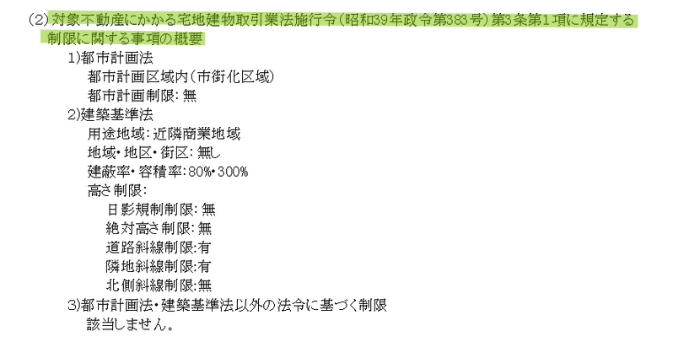
③ Principle of highest and best use of land and zoning
The value of land is greatly influenced not only by its location and area but also by legal restrictions regarding “what kind of building can be built on that land and at what scale.”
Principle of Highest and Best Use and Floor Area Ratio: Areas with high floor area ratios or commercial zones where usage restrictions are relaxed tend to maintain asset value because there are many options for land utilization.
Zoning and Liquidity: Areas with strict building restrictions, such as ‘Category I Low-Rise Residential Zones’ or ‘Urbanization Control Areas,’ maintain a pleasant environment but may contain ‘liquidity risk’ because large-scale development or changes in use are difficult, limiting the number of potential buyers at the time of sale.

④ Maintenance (Capital Expenditures) and Change-of-Use Risk
Maintaining property value or changing its use may require significant capital expenditures (such as large-scale renovation work). Please be aware that if these costs exceed initial estimates, it may affect final distributions or the return of principal.
3. How to Balance ‘Expected Yield’ and ‘Investment Period’
While ‘expected yield’ is often highlighted on recruitment screens, it is not recommended to make investment decisions based solely on the numerical value. It is essential to evaluate it in conjunction with the ‘investment period’ and the ‘source of revenue’.
① High Yield and Risk (Confirming the Source)
High yields are often presented against a backdrop of significant risk.
Ratio of Income Gains to Capital Gains: Check whether the source of the expected yield comes from ‘daily rental income’ or relies heavily on ‘capital gains at the end of the investment period.’ Funds with a high dependency on capital gains have higher uncertainty regarding potential loss of principal or extension of the investment period depending on future market conditions.
② Investment Period and Portfolio (Fund Management)
The length of the investment period directly affects your own funding needs.
Preparing for Capital Lock-up: In real estate crowdfunding, it is generally difficult to cancel midway or recover investment funds during the investment period (even if using the member-to-member equity trading function in ‘T’s Funding,’ there is a risk that the trade will not be executed if there are no other members (buyers) who wish to purchase).
Portfolio Adjustment: After confirming that the funds are ‘surplus funds that you do not plan to use for the foreseeable future,’ it is important to build a portfolio that is diversified across multiple investment periods and property types, rather than concentrating on a single fund.

In this article, we have explained the basic points for reading and understanding the ‘Pre-Contract Document’ yourself and properly assessing risks when choosing a fund. We ask all investors to carefully review this article and the Pre-Contract Document for each fund in advance, and to make careful decisions after considering the balance between benefits and risks.