Real estate crowdfunding (hereinafter referred to as real estate crowdfunding) is a system where money is collected in small amounts from many investors to operate real estate, and the profits are distributed to the investors. The entire process from application to contract is completed online, and many options allow for investments starting from around 10,000 yen.
The foundation for this is the Real Estate Specified Joint Enterprise Act (REJEA), enacted in 1994. Originally, it was a law for “fractional investment products” where multiple investors would pool their capital to jointly own real estate, and applications were made in person or via paper documents. With the 2017 legal amendment, contract procedures could be conducted online, which is when the current form of real estate crowdfunding began to spread.
For investors, it is a system that allows them to invest in real estate with small amounts and leave property management and tenant interactions to the operator. The investment period and expected yield are indicated at the time of recruitment, and many funds also adopt a structure (subordinated investment) where the operator themselves invests and bears losses first if they occur. However, principal and distributions are not guaranteed.
For operators, it serves as a means to raise funds from individual investors in addition to bank loans and their own capital. It makes it easier to allocate funds to properties that are difficult to obtain bank financing for, and it also has the aspect of making the company known to those who have registered as investors. We will look at the mechanism from the operator’s perspective in detail in “Real Estate Crowdfunding for Beginners ②”.
Flow of Money
1. The operator selects a property and recruits it as a fund.
2. The investor applies online and invests.
3. The operator operates the property (rents it out to earn rent, or increases its value and sells it).
4. The profits earned are distributed to the investors.
5. When the investment period ends, the investment capital is returned (redemption).
The results of the operation depend heavily on the operator’s capabilities.
Organizing the “Types” of Real Estate Crowdfunding
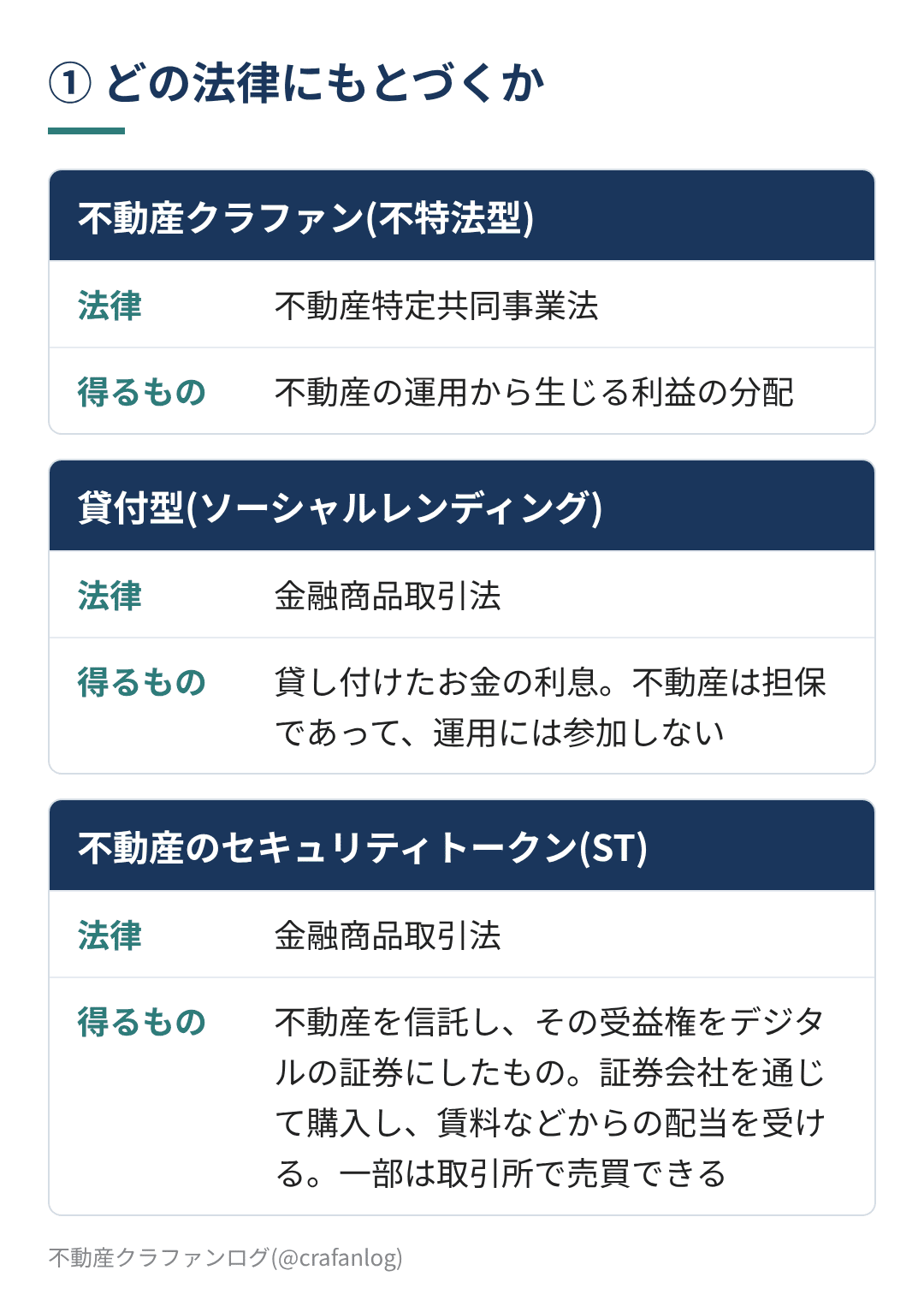
Even though we call it “real estate crowdfunding,” the content is divided into several types. You can identify which product you are looking at by organizing it from the following four perspectives.


There is also a “rental type” where investors buy a shared interest in a property and lease it to an operator to receive rent, but these are few in number, and almost all funds recruited online are of the anonymous partnership type.
③ Application Method
-
Electronic Transaction Type (Online Completion): Everything from member registration to receiving contract documents is completed on the web. This became possible with the 2017 legal amendment. So-called “real estate crowdfunding” refers to this.
-
In-person/Paper Document Type: Applying at a storefront or by mail. Common in fractional investment products that existed before the legal amendment.
④ Operator’s Involvement
-
In-house Operation Type: The operator selects the property themselves, operates the fund, and also handles the recruitment. Many services are of this type.
-
Platform Type: Lists funds from other operators on their own site and acts as an agent or intermediary for recruitment. The operator who listed the fund is the one who manages it.
Scope recorded by this account
This account primarily records “online-only, self-operated” funds, focusing on Real Estate Specified Joint Enterprise Act (Fudosan Tokutei Kyodo Jigyo-ho) types and anonymous partnership types. Lending-based products, products available only in person or via paper documents, and sites that merely list other companies’ funds are not included in the market totals to avoid duplication and difficulty in comparison, and are treated as references as needed.
Market Size (Aggregated by this account)
-
Registered operators permitted to conduct electronic trading business: 142 companies (Ministry of Land, Infrastructure, Transport and Tourism list, as of August 31, 2026)
-
Total amount raised from January to September 2026: 156.8 billion yen (+14% year-on-year)
Summary
-
A system that allows you to invest in real estate online with small amounts
-
Operations are conducted by the business operator, and results depend on the operator’s capabilities
-
Principal is not guaranteed (risks will be explained in detail in “Real Estate Crowdfunding for Beginners ⑤”)
Next time, we will look at the mechanism from the operator’s side, specifically why operators raise money through crowdfunding.
Sources: Ministry of Land, Infrastructure, Transport and Tourism “Materials related to the Bill to Amend the Real Estate Specified Joint Enterprise Act” / Ministry of Land, Infrastructure, Transport and Tourism List of Real Estate Specified Joint Enterprise Operators / Aggregated by this account (from each company’s official website, excluding resales and failed offerings)